You've been breathing your whole life. Obviously. Automatically. Without thinking about it. Your body knows how to do this without your conscious involvement.
But somewhere along the way, your breath got small. Shallow. Restricted to just the top of your chest in these tiny sips that keep you alive but don't quite let you live.
You didn't notice it happening. Just like you didn't notice your shoulders creeping up toward your ears or your jaw clenching or the way you started holding your stomach in, not just physically but energetically, like you've been bracing against something for so long you forgot you're doing it.
What shallow breathing is actually doing
Your breath reflects your nervous system state. When you're in fight or flight, when you're stressed or anxious, or just chronically on edge, your breathing naturally becomes faster and shallower. It's your body's way of preparing for a threat. Of staying ready to run or fight or freeze.
The problem is that for a lot of people, that state has become permanent. The threat passed years ago, but the breathing pattern stayed. And now your body is stuck in a feedback loop where shallow breathing signals danger, and the sense of danger keeps the breathing shallow.
You're essentially telling your nervous system that you're still in crisis. That it's not safe to relax. That something bad might happen at any moment, so stay alert, stay ready, don't let your guard down.
And your body listens. It floods you with stress hormones. Keeps your muscles tight. Makes sure you're prepared for an emergency that isn't actually happening.
The first full breath
When you finally let yourself take a real breath, not the shallow automatic ones but an actual full breath that drops all the way down into your belly, something in your system recognizes it immediately.
Your nervous system reads that deep, slow breath as a signal. As information that maybe, possibly, things might actually be okay right now. That you can afford to let your guard down just a little. That the emergency you've been preparing for might not be coming after all.
And in that moment, in the space that full breath creates, things start to shift. The muscles you've been holding tight for months or years begin to soften. The thoughts that have been spinning start to slow. The feeling of being constantly on edge starts to ease just slightly.
Sometimes that first real breath brings tears. Not because anything is wrong, but because your body has been waiting for permission to release what it's been holding. And the breath gives it that permission.
What breathwork actually does
This isn't about breathing exercises as a nice relaxation technique. This is about using your breath as a direct line of communication with your nervous system. As a way to tell your body that it's safe to stop surviving and start actually living.
When you breathe consciously, when you slow it down and deepen it and let it move through your entire body instead of just your chest, you're not just getting more oxygen. You're actively shifting your nervous system out of fight or flight and into a state where healing and regulation become possible.
This is why people who start breathing differently report that things they've been dealing with for years suddenly start to shift. The anxiety that's been a constant background noise starts to quiet. The tension that's been living in their body starts to release. The emotional numbness they've been operating from starts to thaw.
Not because breathing fixes everything. But because breathing creates the conditions in which your body can finally do what it's been trying to do all along. Process. Release. Regulate. Heal.
The practice that changes the pattern
You can't think your way into a regulated nervous system. You can't logic yourself out of chronic stress. But you can breathe your way there. Slowly. Consistently. By teaching your body through repeated experience that it's safe to let go.
This happens through practice. Through returning to your breath again and again until the pattern of shallow survival breathing starts to shift into something deeper and more sustainable. Until your default state stops being braced and starts being present.
Your breath is the most powerful tool you have for changing your internal state. Not because it's magic. But because it's the one thing you can consciously control that directly affects your nervous system. And when your nervous system shifts, everything else follows.
You don't need fancy techniques or perfect conditions. You just need to start breathing like someone who's allowed to be here. Like someone safe. Like someone who doesn't have to brace against the next moment because this moment is enough.
The way you've been breathing is a window into how your nervous system has been surviving. If you want to understand what it's been surviving, and what it would take to finally let it rest, start here.
Find your survival pattern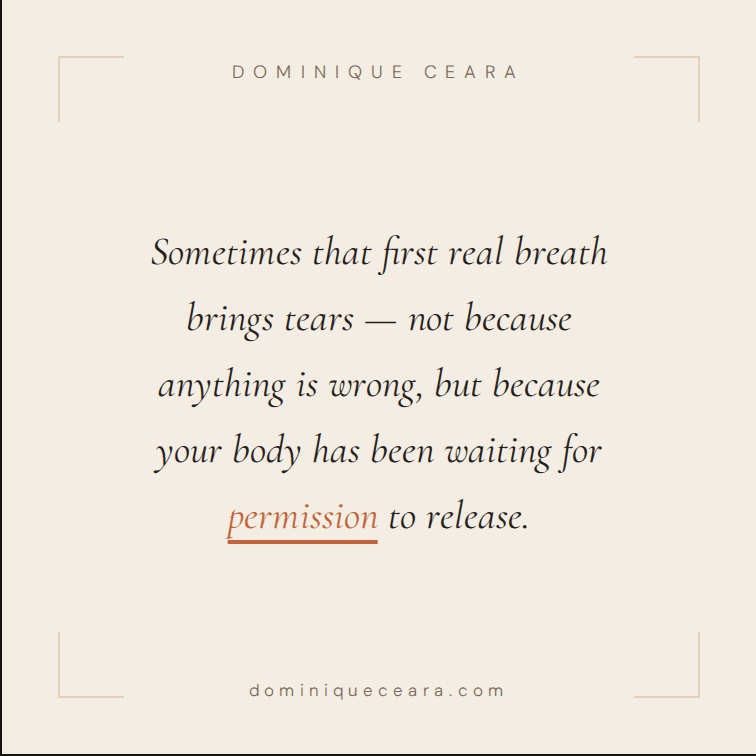
Originally published on Substack
Dominique Ceara
As a certified breathwork instructor, somatic healing practitioner, and life coach, I am dedicated to guiding others on their journey of healing, growth, and transformation. With a unique blend of ancient wisdom and modern techniques, I empower individuals to connect mind, body, and spirit, fostering resilience and clarity in every step of their personal evolution.